XML Structure and Syntax
FSML uses XML structure and syntax, so the most common XML terms
used in this document are defined below for the reader's convenience. For
more information about authoring XML documents, see the XML
specification at
http://www.w3c.org/TR/REC-xml.
Element: A declaration of an item from the document's Document Type
Definition (DTD). Also called a tag. The syntax of an element is as
follows:
For elements that do not contain other elements -
<ElementName Attributes/>
For elements that contain other elements -
<ElementName Attributes> OtherElements </ElementName>
An example is given below, under ``Examples.''
Attribute: A setting or configuration of an element. The syntax of an
attribute is as follows:
Attribute="value"
Tables
This document uses tables to define the attributes that should be specified
for each element. The ``Required'' column indicates whether or
not an attribute must be specified.
| Attribute Name | Description | Required |
|---|---|---|
| type | Name of the file type | no |
| description | Description of the file type | no |
| etc. |
Examples
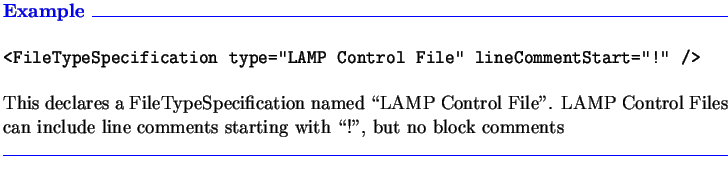
This document also includes examples of how these elements look in an
actual document. These examples are depicted as follows: